Lancer Kind, Science Fiction author

Stimulants in print

Skip to: Content | Sidebar | Footer

  • Subscribe to feel the love of each new post or click for RSS feed:

    Loading... Loading...

The Clone Wars Decoded

14 July, 2010 (18:19) | Uncategorized | By: Lancer Kind

It was 2009 (late) before I started watching the animated series Star Wars Clone Wars.  The show had been running for a few seasons already.  In fact, the animated series has been imagineered in a few different flavors: a movie released to theatres, a Cartoon Central TV series, and an Adult Swim styled cartoon movie.

Frankly, Lucas Films has made it an organizational mess.  It took me a few hours of IMDB, Wikipedia, and Google research to figure out what there was to watch and in what order to watch them.  Here is my rescription for catching up in four steps.

Step 1, watch the live action movies

The first two movies are the setup for the cartoons. Their names are: Star Wars Episode 1: The Phantom Menace, Star Wars Episode 2: Attack of the Clones, and Star Wars Episode 3: Revenge of the Sith.  If you are a very orderly person, you may opt to not watch episode 3 until you do steps 2-4.  But I’m not very orderly so I recommend  watching the live action movies first, and because sometimes it’s nice to know where a character is headed, and then watch that character at an earlier time and see how he struggles along that path.

Step 2, Go for an Adult Swim

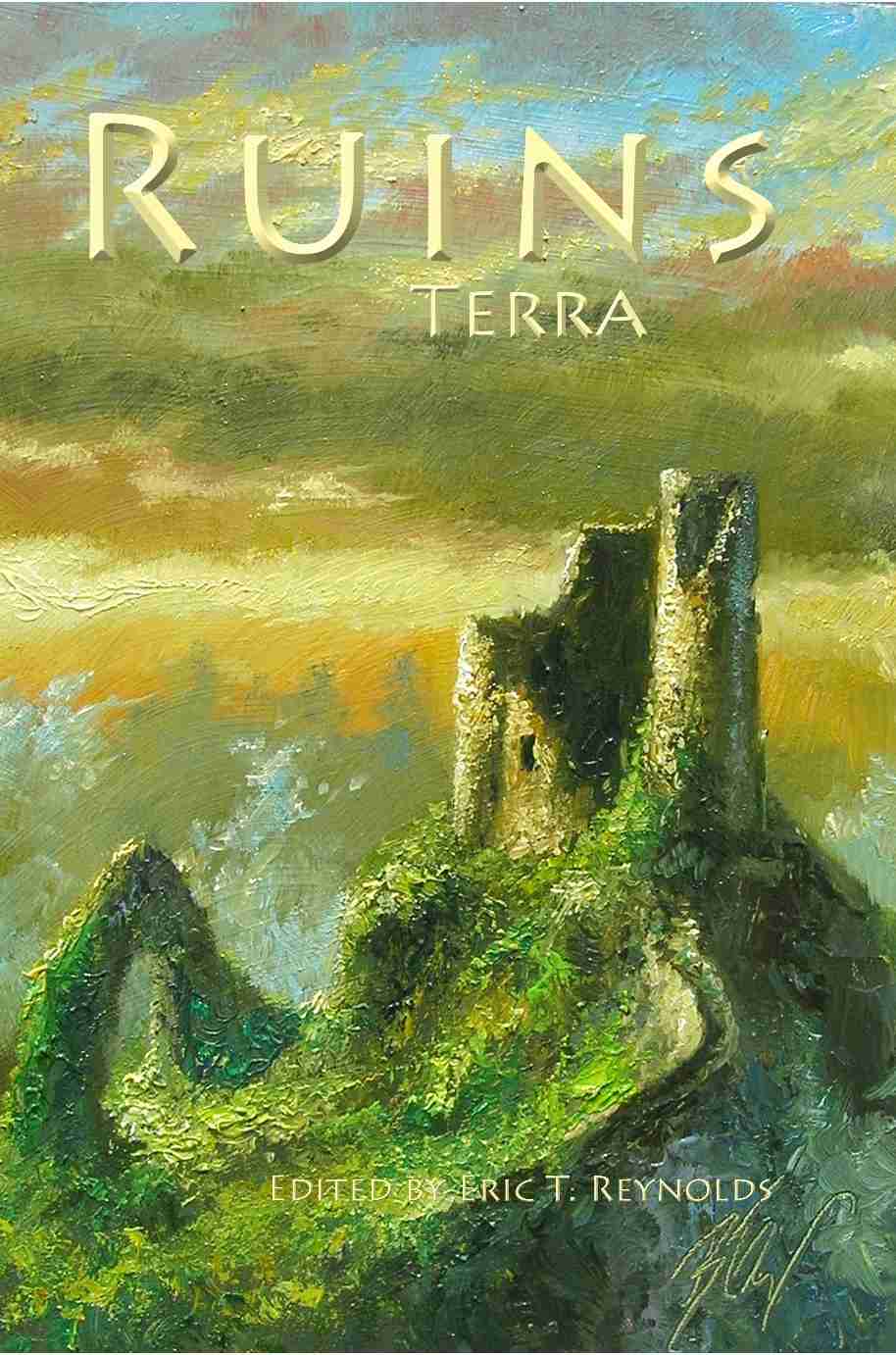
Lucas wanted you to have something to do after watching Episode 2 Attack of the Clones in 2002, until he released Episode 3 Revenge of the Sith. So he gave you cartoon shorts. They were released in 2003, 2004, 2005 as teasers (sometimes on TV, sometimes in the theater).  Notice the “Adult Swim” rough and minimal style of animation on the front cover.  This series of shorts (also called the “micro” series) was later combined to make a large narrative about what Anni had been up to between Star Wars Episode 2: Attack of the Clones, and Star Wars Episode 3: Revenge of the Sith. I enjoyed watching it very much. It’s an example of doing narrative with sparse dialog and lots of showing.
 

Step 3, Star Wars: Clone Wars movie

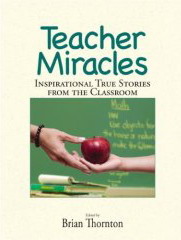
Notice the distinctive difference in animation on the movie poster versus the “Adult Swim” style.  This movie was used to kick off the TV series in Step 4.

Step 4, Star Wars: The Clone Wars TV series

This TV series ran immediately after the animated movie and is still running today (crica 2010). The animation style is the same as that of the movie.  As of now, only two seasons are out in blu-ray.

Now go to Amazon or NetFlicks and find ways to enjoy the Star Wars experience! (Sorry, JarJar Binks is still included.)

Write a comment


Daily, get your Science Fiction while you can

28 June, 2010 (10:19) | Uncategorized | By: Lancer Kind

The advent of the Internet has increased the rate of information flow. We used to wait a month for a new magazine issue or a week for a favorite TV episode. Today, life progresses at Internet time. Online magazines report not only daily but when the story breaks. You can watch movies ‘on demand’ rather than run to the video store or wait for it to show again on HBO.

The Singularity, a theory that says that since technological advancement has been doubling for the past centuries, we’ll reach a point where the change will become so rapid, that society will become wildly unpredictable. This point is called The Singularity.

Once The Singularity hits, your favorite TV show will finish its entire season BEFORE you’ve seen the first episode. This is upsetting because the last episode will be in a new HD format of a 1080googleP, and although it was amazing, it’ll be a commercial disaster because no one knew about it in time to watch its ten second season. (It jumped the shark in the ninth second.)

So before the disaster that is The Singularity, enjoy your leisurely Internet age of daily magazines such as Daily Science Fiction. Visit their website and subscribe, for free, and receive science fiction short stories. The eZine has just started up and will be releasing stories to their subscribers late this Summer/Fall.

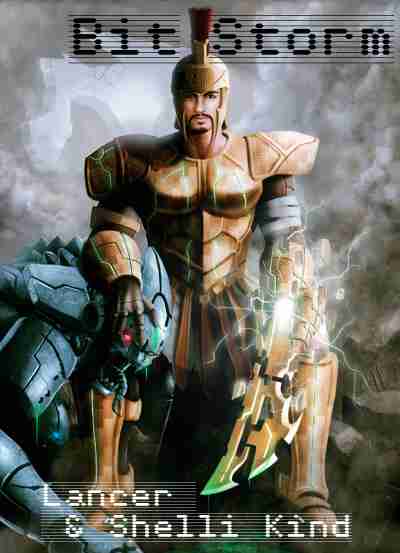
One of the stories they’ll send you is a story I wrote called Bit Storm, which received honorable mention in The Writers of the Future contest. Diff makes a living setting up and maintaining an AI for a financial company. He makes the acquaintance of a greifer who goes by Slick Devil who challenges Diff to prove him wrong, that war is a natural and necessary in society and the skilled survive to prey on the weak. Although Diff tries to steer clear, Slick Devil involves him in a disastrous Halloween stunt that risks people’s lives.

As I’m sure there will be stories about life during and post Singularity, it would be irresponsible not to subscribe to Daily Science Fiction. You owe it to yourself to learn as much as possible before The Singularity is upon us. (People addicted to iPhones and PvZ is just a coming herald.)

Subscribe soon, before Daily Science Fiction becomes Hourly Science Fiction or, shudder, Quantum Science Fiction.

Write a comment


Agile Writing: A Novel Approach to Writing a Novel

18 June, 2010 (11:25) | Agile Noir | By: Lancer Kind

Sometimes a writer’s day job can really help him write.  It all started in 2000 when Asim Jalis, a friend of mine, kept pestering me about how to apply eXtreme Programming (XP) to writing.  I say pester, because, like an a fly buzzing around the room which had grown a mouth and spoke with the voice of James Earl Jones, he kept challenging me until I tried to do things like unit test writing, pair write, and a bunch of other crazy.  (Asim, when you become wildly popular and rich because people want to put recordings of you on their ringtones, you can pay me back.)

So we applied some of the XP practices to writing projects with a little success.  But it never revolutionized my approach to producing writing.

Later, after years of doing Agile Consulting, I’ve learned other Agile processes that weren’t so tailored to the task of engineering software.  Scrum is a great process that can be applied to the production of anything that you can make a list of “what you want.”

I decided to write a novel that teaches those in the software industry how to use this process, but in an entertaining way.  A more direct way would be to become friends with Asim, find friends like Asim, hire me as a consultant, or hire an Agile consultant.  But if you can’t do that, then you can learn the principles of Agile development from my novel Agile Noir, which you could read on a flight from Florida to Seattle and ALMOST get the same entertainment value as hanging out in a coffee shop with its author, or his friend Asim (he prefers his name pronounced Awesome, by the way).

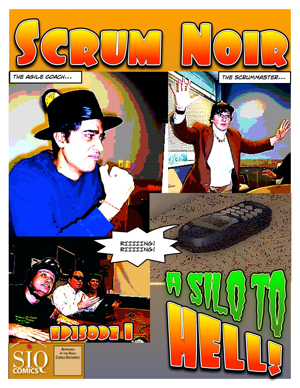
What’s so novel about an Agile novel?  Well, Agile Noir is the only Agile business novel out there.  There are plenty of non-fiction books about Agile but hey, everyone–even non-Agile people–will enjoy reading a novelization about Kartar, a project manager, and how he uses Agile processes to save his project and his life.  That’s pretty novel!  The other novelty is that Agile Noir is being writing using an Agile process called Scrum.  And where XP didn’t fit the writing regime very well, Scrum worked very nicely.

Writers who may wish to use Scrum for their writing projects, Agile practitioners who wish to read an informal case study on applying Agile to writing, and readers who are interested in learning more about Agile, will be interested in the “making of” Agile Noir that starts at this page: Using Agile to write Agile Noir.  You will find links to photos and videos of me going through the process of using Scrum to write my novel.  And since the writing of my novel is still in progress, this page about the making of will continue to grow in an incremental fashion until Agile Noir is finished.

So check it out if you’re interested in Agile, in writing, or wondering what happens when you have friends like Asim who speak dramatically like Darth Vader.  All the time.  ;-)

Write a comment


Business Novels–The Big Trick

12 June, 2010 (14:14) | Agile Noir | By: Lancer Kind

As a writer, I spend a lot of time explaining things.  With my prefered medium of the written word, I wrote a story to explain what it would be like to have a conversation with moss (Moss Memoirs) for example.

As an Agile consultant, I explain to my client how to organize their software development teams so they can produce their products in a predictable way.  After ten of years experience of doing that, you have all the Q and A down and can quickly help your client through the pitfalls of doing their job differently.  You also notice familiar patterns: this client wants to do Agile only to make his boss happy, this other client wants to change their practices without actually changing anything, and this client is willing to try Agile but worries they could lose what tenuous hold they have on keeping their project from spiraling into chaos.

I spend 90% of my time covering Agile 101 type topics with each new client.  What can I do to ‘up the game’ of an entire industry?

Educating the masses with a book is a scalable approach.  But there are already a lot of Agile books out there that people aren’t reading.

Perhaps they aren’t the right kind of books.  The Agile advocates are reading Agile books, but the people who aren’t doing Agile and don’t enjoy reading about engineering processes in their spare time, aren’t going to pick up a book on Agile.  But maybe I can trick them into learning, by writing something entertaining that includes learning about Agile….

What’s a Business Novel?

A business novel is a work of fiction that is designed to illustrate business concepts.  The business concepts are non-fiction and effective in the real world.  The scenario surrounding the concepts is fiction.  Think of it as a detailed case-study that contains more information then a real case-study can possible have (the author knows what characters are thinking and all the details of the situation).

What’s the difference between a work of fiction and a business novel?  The goal of a fiction novel is to entertain.  The goal of a business novel is to educate.  A work of fiction is shelved with its genre (The Pelican Brief is in the Thriller section, for example) where a business novel will be shelved in its non-fiction area of expertise.  The business novel I’m working on, Agile Noir, will be shelved in the computer/business section, next to the copies of eXtreme Programming Explained, Agile Software Development with Scrum, Waltzing with Bears, and Who Moved My Cheese? (another business novel).

AEI logoIn any discussion about genre categorization, not everyone agrees.  American, a journal of the American Enterprise Institute (AEI), has this list of The Ten Best Business Novels but none of them are business novels.  I can’t fault their taste in books.  What’s listed are science fiction, thrillers, and mysteries that are set in business environments.  A few others are classic industry novels (novels designed to make social commentary on/about people and their industry).  I think that author Neal Stephenson would disagree at listing his Cryptonomicon as being a business novel.  (I love the book.)  Me agreeing with anything the AEI (a conservative “think tank”) has to say is likely never to happen.  (My rule of thumb–anyone who uses the US flag in their logo, who is not a governmental agency, is out to manipulate you into thinking they would be better at governing.)

Jeff Cox, author of the best-selling business novel, The Goal, has an article about business novels that is spot on.  He knows what he’s talking about.  Here is a similar article about business novels is by a consultancy formed around corporate education.  They have this nice quote on their website: “Remember – Readers are Leaders.”

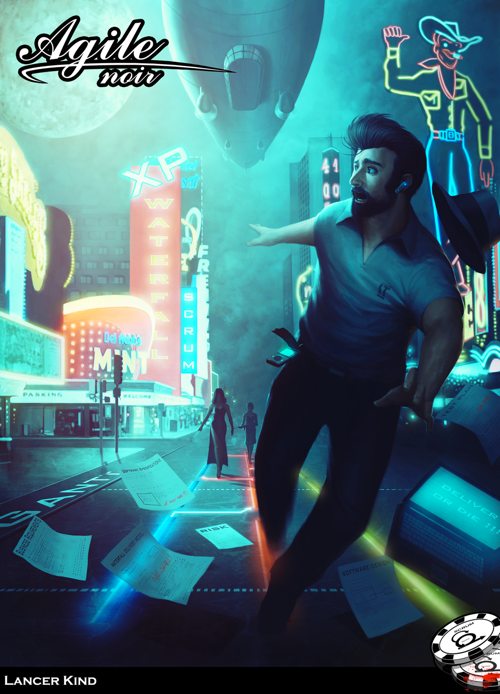
As for me, I’ll continue to writing Agile Noir, a story about Kartar, an embattled project manager who works for a Casino in Vegas.  As his Waterfall project (non-Agile) gets further and further behind, he discovers that his budget is financed by the mob and will have him killed if he can’t deliver on time.  After some setbacks that are classic to the Waterfall software developement life cycle, he meets Agile consultant and coach Agilena, an intelligent and beautiful woman, who tries to give Kartar the advice he needs to turn his project and life around.

I’ll be sending book proposal to publishers of business books, many of whom don’t understand business novels.  Then it will be my job to explain how together we can profit by publishing non-fiction dressed up in a fictional outfit, and hope I don’t have to write a business novel about the efficacy of business novels.

You can read early drafts of Agile Noir at my Stimulants Online page.

Write a comment


Interview with my pal, William McIntosh, Hugo and Nebula Award Nominee

25 May, 2010 (08:48) | Uncategorized | By: Lancer Kind

I’ve always said that if you can’t be in high places, it’s good to have friends there who can tell you about the view.

Dear reader, unlike my usual ’speculative posts,’ Will really is my pal, and he really did get nominated for these very cool awards.  Yes! Really!  I’ve got pictures!  William McIntosh and I worked with each other at the Clarion Writer’s Workshop in 2003.

Editorial: Will forgot to send me a new photo for the interview.  The only photos I have of him are from our Clarion 2003 class.

Sean Melican, William McIntosh, Ben Kuo, Lister, Jamie Kress

Sean Melican, William McIntosh, Ben Kuo, Lister, Jamie Kress

REDACTED due to witness protection program, Matt Fitz, Tammy Inman, Jonathan Laden

Douglas Texter, Cathy Morrison, Tom Doyle, Joel Schnack, Lancer Kind

Jamie Kress, Robert Canipe, Ryan Butkus, Douglas Texter, Cathy Morrison

And yes, we occasionaly fed Mr. Waldrop for a job well done.

I couldn’t find a picture of Kyle Phegley, the man behind the camera, so I did a Bing image search for Kyle and found this.  Bing says it’s him:

Kyle Phegley?

But pictures of tired writers who have been writing and critiquing into the wee hours of the night, and then forced to get up early to give critiques (thank you Mr. Waldrop, Nalo Hopkinson, Richard Paul Russo, Scott Edelman, Kelly Link, James Patrick Kelly, Maureen F. McHugh) don’t make good interview pictures.  But Bing’s image search does!

Here’s what searching for McIntosh comes up with:

Which I can only assume are: Will’s cousins, the next two are Will after he uploaded himself into some hardware (a sacrifice necessary to reach the level of story research needed to get a Hugo and Nebula nomination for his short story Bridesicle, about a woman who was stored in a Cyro-freezer).  The beefcake is a photo of Will before he uploaded himself into hardware.  And the last photo, I guess, is Will’s kid sister.

Hey Will!  This is your pal, Lancer Kind.

Lancer?  Lancer?  What a strange name.  I think I remember some unfortunate person going by that once.  I think it was a workshop…

Yes!  You’ve got it bosom buddy!

Will, what gives?  You’re an award hog!  You have not only been nominated for a Hugo,but also a Nebula!

Yes, can you believe that?  I got the call two months ago (Feb 2010) from the Nebulas, for work published in 2009.  And now the Hugo!

To how many of the major publications have you sold short stories?

Bridesicle is the fourth and all of them to Asimov’s.  There are about seven short story markets I’d call majors now: Asimov’s, F&SF, Analog, Realms of Fantasy, Clarkesworld, Tor, and Strange Horizons.

I feel loyalty to Sheila since she was the first of the majors to buy something.  I always send anything new to her first.  I’ll meet her for the first time at the Nebulas.

This year, the World Science Fiction (World Con) convention is in Melbourne, Australia, September 2-6.  Per Word Con tradition, it has local name given by the holders of the convention.  It’s name is AussieCon4.  Since the award ceremony happens during the convention, are you attending AussieCon4 to sit in the audience, wringing your hands, to see if you win?

At first I wasn’t sure, but then how many chances do you get to go to World Science Fiction Convention as a Hugo nominee?  The answer for me may be only one.  So I feel I have to go.  I just can’t miss out on going to the Hugo awards.  But the travel (from Georgia, USA) is brutal and I can’t linger there when my wife is home with our young twins.

Will you hire someone to warm your seat, like the VIPs do at the Oscars?

(laughs, you can tell by the VUE meter.)  Well it really is our Oscars.  You dream about being nominated.  I still can’t believe it’s happened.

How can I skip it?  I just have to go. I hope I know people there.  Scott Edelman will probably be there.

(discussion ensues about how Mr. Edelman seems to be at all the World SF Cons)  Hopefully this blog will help you meet more people.  Especially if I use your pre-uploaded photo:

Are you going to talk on some panels?

The people at World SF Con have asked and I’ll make a final decision if I’ll be there this week.  If so, I’ll likely do what ever Hugo nominees do.

Talking to important people in the bar.  :-)

(laughs) I still feel like I’m someone who should be sitting in the audience listening to the writers.

You’re too modest!  STOP IT!  :-)   You need a panel to talk about your fascination with frozen people.   How many votes did you get for the Nebulas?

I got nineteen in the Nebulas.  The top vote getter was 22.  They haven’t reported the Hugo votes yet.

How many people did you have to sleep with to get those votes?

Heh.  I’ll tell you, that’s why it’s so surprising.  With the kids coming, I was too busy to send out many stories in ‘09.  One day, someone on the Codex site said to me, ‘Hey you’ve got a lot of votes’  When there was only a day left, I was emailing my friends–’Hey I’m close!  I’m right there!’

It never even occurred to me that could happen.  With the kids coming, I didn’t get to work much and I only published two stories that year.  I never even dreamed it until someone on Codex mentioned that I was on the voting.

Since we went to Clarion together, I’ve always used used you as a yardstick for my own career.  In 2006 you had accumulated a number of sales and I hadn’t sold much.  So I talked with you about what you were doing and then compared that to what I was doing.  The biggest difference was that you maintained discipline about keeping your stories circulating through the markets.  I’d forget to do that because, at the time, I had only two hours a day to write, so I was a loath to spend any of that time on marketing.  After our conversation, I had the realization why what I was doing wasn’t working.  I made it my New Year’s resolution to write less and that really helped.

So now I have to ask myself the question: How the hell do I get a Neb. or Hugo?  It sounds like one needs to publish in a big distribution magazine and get some buzz as you did.

Yes.  The nominees tend to come from the magazines with the largest readerships whether they are in print or online.  People can’t vote for you unless they’ve read it.  Any of the big ones.  The big four, though I think it’s safe to say the big seven or eight.

Rachel Swirsky had blogged what she was voting and she had picked Bridesicle for best short story.  I think that created a lot of buzz.  She was on the ballot for best Novelette.

How’s your cover letter going to look now?  How about you open with: I’m a Hugo nominee, so you bitches better publish my story.

(Laughs) Some publications just aren’t a good fit for me, even if the story is a great story.  Gorden Van Gelder probably saw my first fifty stories and didn’t buy any of them, though I certainly don’t hold any ill will against him.

My feeling is that F&SF and Gordon really values style–people who are great with words and images–and that’s not me.  Sheila really values a good story and focuses less on the turn of a phrase.  That’s my feeling and that’s how I’ve always distinguished those the two magazines.

Who do you write like?

I write like other people who are very straight forward.  I just tell the story.  I don’t consciously try to create clever ways of saying things.  Perhaps I write like Robert Reed.  He’s always in the ‘Years Best’ anthology because he always creates such great stories.

What was your inspiration for Bridesicle?

I usually just get ideas and they show up as as ideas will, and I just jot them down.  I first wrote the whole story from the perspective a guy who is visiting this cryogenic dating site.  He’s a loser and doesn’t have the money to help any of them, but he wants the attention of a woman, but can’t get it other than from these frozen women.  I wrote the whole thing and then put it out for some of my writing friends to read.  Mary Robinette Kowal said, ‘I think your missing it.  I think you need to write this from the point of view of the woman.’

And you do what you always do when you get feedback that says, throw out the six thousand words you’ve written and start over.  And of course, you go: I don’t want to do that!  I want THIS story to be good.

And you let a little of time pass, and then go back and look at it while going through the stages of grief: death, denial, bargaining, depression, and then finally acceptance, realizing she’s right.  So I re-wrote the story from the beginning and that was Bridesicle.

What other stories have you done major re-writes to and had them turn out to be so successful?

I’m trying tor think about other stories where I have several versions on my hard drive.  I don’t know if other people make file versions.  I always feel if I’m going to re-write, I’m going to screw it up so I make a copy of the file.  The other three I published in Asimov, I did revisions but none were major.  One story, Midnight Blue, I wrote in two days and did ten minutes of revisions.  I wished they were all like that!

I sold one to Interzone called A Clown Escapes from Circus Town and that one had a version number of seven.  That one I kept doing over and over again.  I think every writer has a few of these where you think the idea is good, and you keep trying to write the story, but it’s bad every time.

I have one, about multiple personality disorder where it’s possible to induce the condition without trauma, and do it voluntarily.  A cult is started around this activity.  I’ve completely rewritten this story at least four times, and it’s still no good.  I remember the first time I did it, Joseph Murphy critiqued it and said, ‘you’ve taken an interesting idea and told it in the dullest, driest way possible.’  There are a few writers on Codex where if they tell me it’s no good, it’s no good.  Like Ian Creasy.

He’s like the best critiquer.  Just unbelievable good.  When he tells me it’s not any good, it’s not any good.  When I send him something, I just wait, hoping.  And when he’s finished I just ask, “Is it any good?  Am I going to be able to sell this?”

“Sadly, this didn’t work for me.”

I just say, “Dammit!”  He’s so perceptive.  I know he’s going to be right.  I can pretend he’s not going to be right, but he’s going to be right.

Are you working on any novels?

I’ve got two novels I finished last fall.  And right now, I’m working on a third.  I recently got an agent, Seth Fishmen, and he’s is shopping my novel Soft Apocalypse.  He’s a great guy and I’m excited to work with him.  I discovered him through Ted Cosmaka, a shooting star who just got a nomination in the Nebulas and signed a great contract with Del Rey.  Ted put in a good word with Seth.  I sent Seth Soft Apocalypse and he called me back in five days.

You got the phone call!  It actually does happen!

The other novel is a slipstream baseball novel.  It’s funny, this thing about baseball genre novels.  There are very few of them, but the ones that get out there are all successful.  So I decided to write one.  Like Shoeless Joe,  the Iowa Baseball Confederacy, and Bishop’s Brittle Innings.

We’ve talked about your completed novels, do you have something that’s unfinished and in progress?

I’ve got a few short stories, but they are just sitting right now.  I’m spending a lot of time on a new novel about a terrorist attack in New York.  So many people die, it pokes a hole between the world of the living and the world of the dead, and the dead come back and posses the living.  So you have much of New York fighting with a dead person for control of their body.  It’s about this cartoonist who draws a comic strip and he’s possessed by his grandfather who invented the strip and did not give him permission to continue it.  And Grandpa is seeking his dead wife who is possessing the body of another woman.

Oh dear!  Grandpa is going to ruin his grandson’s life, not to mention that New York is going to be in a bit of a mess.

Will, congratulations on the nomination!  You’re an elitist now!  Congratulations on crossing that divide!

Let’s wish him luck in the voting for Bridesicle and hope he brings home a nice Hugo and a Nebula!

2007 Hugo

Nebula

Comments

Comment from Stephanie Dray
Time June 29, 2010 at 01:12

This is a great interview! Thanks, both of you.

Write a comment