Lancer Kind, Science Fiction author

Stimulants in print

Skip to: Content | Sidebar | Footer

  • Subscribe to feel the love of each new post or click for RSS feed:

    Loading... Loading...

A Cyberpunk ’til the end of the Earth

5 January, 2010 (22:17) | The Book of Exodi | By: Lancer Kind

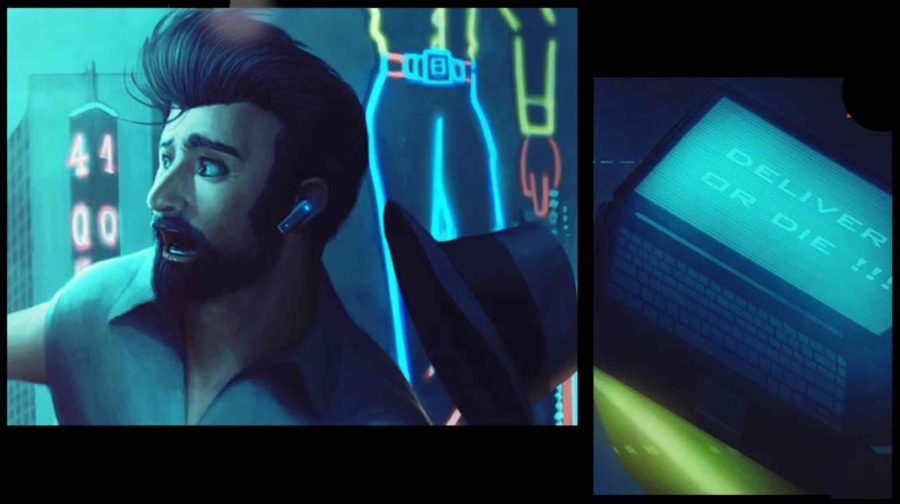
You remember ShadowRun? If you’ve enjoyed the CyberPunk movement but haven’t ever played the ShadowRun role playing game, then you’ve missed something that would have been right up your kind of dark alley.  Recently, I discovered a nice, dark alley in the The Book of Exodi called “A Short Length of String” by Neal F. Guye

The Book of Exodi (see its spiffy ember-colored cover on the right-hand side of this webpage) is filled with stories of people leaving or forced to leave their homeworld. The ShadowRun universe tends to focus on the challenge of pulling off “the big heist”. (Just because it’s the future doesn’t mean hardworking mercs don’t have their own financial crises to deal with.)  Mixing the end of the world with the “big heist” creates some interesting conundrums like: you’re risking your life for money, but the world is ending so what’s the use?  (It turns out there are several reasons.)

As I read “A Short Length of String,” I was told about a big heist, Fixers, and people that felt like Runners and Deckers, but the familiar pattern set by ShadowRun was never the same because the team was dealing with the psychological and emotional fallout from knowing that soon, the Earth will be destroyed.
If you haven’t read a cyberpunk story in a while, read this one and it will get you excited again about big guns and street samurai attitude.  And if you’re so  inclined, find some runners with whom to break out the six sided dice and build a run like this one.

Write a comment


Alternative Science Fiction

10 November, 2009 (22:25) | Uncategorized | By: Lancer Kind

I’m not in love with the term “alternative” but it works for me when I think about music–a different sound than what is usual for the mainstream media.  Of course many a smart-aleck will say, “If the alternative music genre goes too mainstream, what do you call it then?”  I call it evolution!

You see, the organizers of the mainstream (editors, producers, etc.) are doing their best to sell and sometimes that closes them to something that is really out there which may also sell.  It’s OK.  It’s a business.  Everyone is doing their best.  But if you’re tired of reading their vision of what is a great short story, try my favorite source of alternative science fiction: New Genre, a zine that comes out every so often, maybe twice a year, maybe less.  Either way, the editor Adam Golaski looks for the most interesting stories in science fiction and horror that he can find, and like the magazine’s title hints, his taste runs to stories that focus on story and less on genre.

Issue Six recently came out and like every New Genre I’ve read, I read some fiction that I wouldn’t naturally seek out and find.  It’s alternative.  Like the bands They Might Be Giants, or Eels, I have to “hear” the tune before I realize it’s something I want.

“Jack the Satellite Jockey” by Michael Filimowicz reads like a hard science fiction story filled with stats on satellites and rocketry but swerves into the realm of techno-shamanism.  How the story subtly bridges these two ideas is very cool.  The story takes place in orbit above Earth with Jack doing his job–repairing a satellite and we find out one of Jack’s hobbies is sometimes making “adjustments” to the data being beamed back to Earth.

“The Sparrow Mumbler” by Eric Schaller is in a fantasy setting and is about a man named John who has a really difficult job–he is supposed to try and swallow an angry sparrow whose leg is tied by a string to the top button of John’s shirt, and John’s hands are tied behind his back.  And let me tell you, that sparrow is mean enough to John that PETA might be more concerned about the abuse to John’s face than to the indignity the sparrow feels.

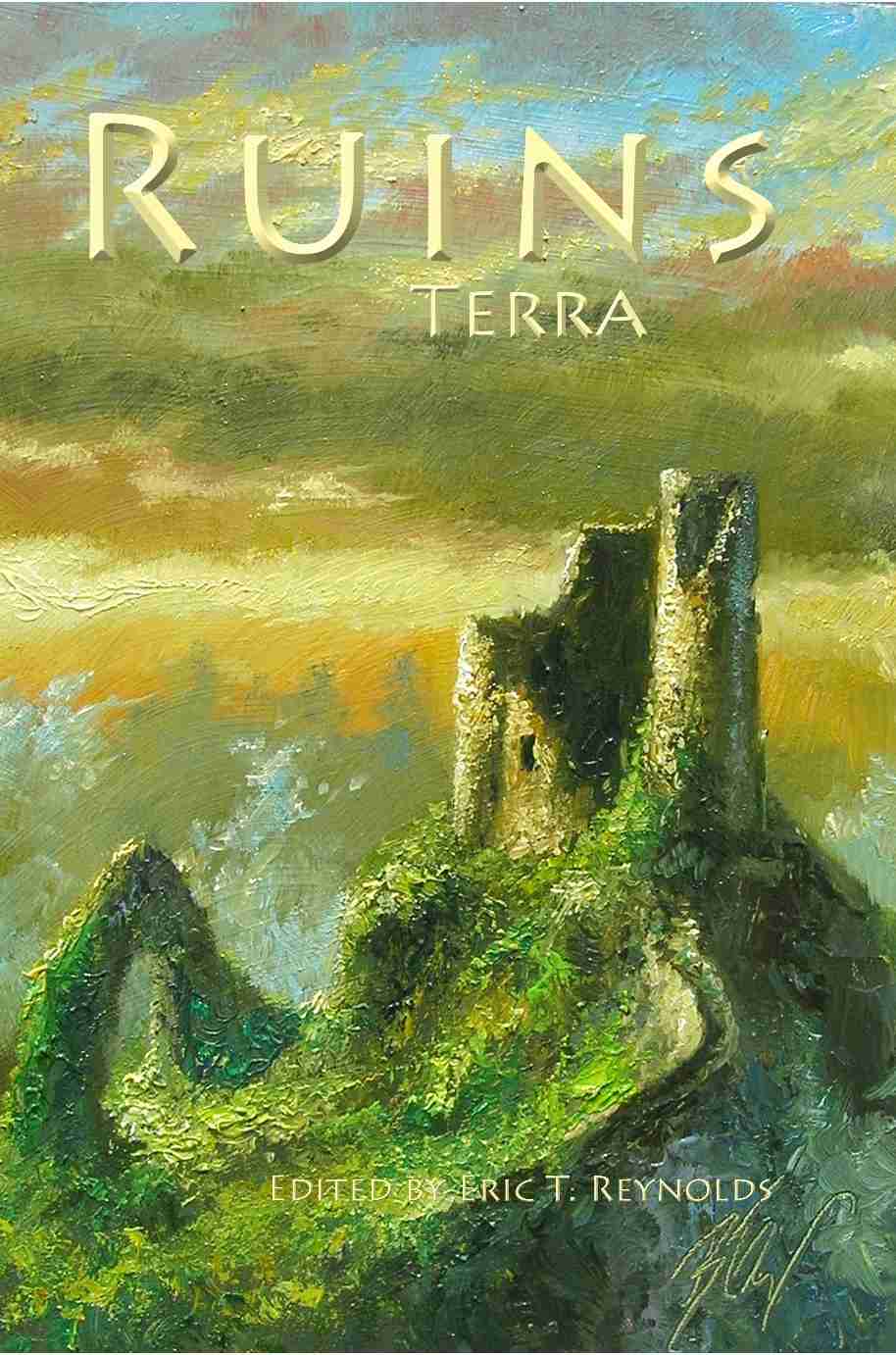
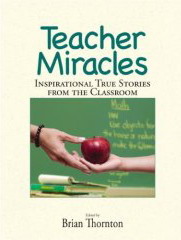
If you think that science fiction short stories end with what you can find on you newsstand (Fantasy and Science Fiction, Asimovs, and Analog) visit the websites and buy a copy of other purveyors of science fiction stories such as New Genre.  And by the way, those anthologies sitting on the right-side of this website contain a smorgasbord of fiction writers and literary styles too.

Write a comment


A New Guard?

26 October, 2009 (23:29) | Uncategorized | By: Lancer Kind

No one likes to see a changing of the guard. The old guard certainly doesn’t.
Today, someone younger (she was 22) told me “I never saw Star Wars, but I’ve seen Twilight.” <insert my horrified expression here>

This travesty is becoming more common. Star Wars is over 30 years old which is twice the age of the teens and pre-teens in love with Twilight.

It’s been suggested by another member of the old guard that I perform the civic duty of booting them to the head, and when they hit the ground, I stomp on them till their brains seep out their ears. (My friend Bill is a member of the violent arm of the ‘old guard.’ So watch out for him.)

Is this fair?  Can Twilight even be considered science fiction? I wouldn’t argue that you would understand the genre if you’ve only seen Star Wars, but I’d certainly feel better about that than Twilight.  But then, I’m a member of the old guard.  Twilight is speculative fiction, not science fiction.  The same goes for Harry Potter, and we know that more of the world is familiar with Harry Potter than Star Wars (people in China bring it up all the time.)  So back to Star Wars versus Twilight.

Star Wars carries itself on imaginative eye candy and has not-well-motivated dialogue in nearly all the movies. To be great, Lucas Films needs someone who actually is a good writer work on the dialog part.

I probably would never have seen Twilight except my girlfriend wanted to watch it. I enjoyed it though I would never admit this in the presence of an ‘old guardsperson.’  The writers/author of Twilight knows how to write dialogue, but it doesn’t have any of the impact of Star Wars because any discussion of Star Wars has to be taken in context of when the original movie came out.
Star Wars was innovative to the extreme for a 1977 film. It did everything that Star Trek did 11 years before Star Wars (1966), but it took the use of special effects to a new (and expensive) level by doing it all over the place. But no 22 year-old is going to have that context without a patient discussion, which I couldn’t supply because I was in shock with what I was hearing. :-)

Twilight is just a good movie. I’m looking forward to the sequel. It didn’t break new ground in the speculative fiction movie industry.

I’m a regular viewer of Attack of the Clones episodes on Cartoon Net (well, really digital download), and I’m enjoying that for the most part though there are moments I feel like it is insensitive to clones and glorifies war too much.

So the changing of the guard will take place whether or not the old guardsperson dressed up in spiffy white armor wants to allow it.  And let’s face it, the chicks dig Edward as much as the boys of the old guard dug Princess Leia.

Why is it that I hate myself now?

There, there Leia, Lancer didn’t really mean it.

Comments

Comment from Matata
Time December 10, 2009 at 22:35

I ve seen both. Is Heroes a science fiction TV show?

Comment from Lancer Kind
Time December 10, 2009 at 23:33

Hey Matata,

I consider Hero’s a close enough cousin to Science Fiction to lump it in as Science Fiction. I wouldn’t be surprised to see a novelization of Heroes sitting on any Science Fiction shelf in a bookstore.

From a Chinese perspective, what is the most important Science Fiction movie that has come out in China?

Glad to hear from you!

To the Audience:
Matata and Rosie are the world’s most Agile technical writers I’ve ever met! If you have documentation about agile in English and you need them in Mandarin, drop a line to Matata. Or if your looking for cool people to hang out with and talk agile, get in touch with them.

==>Lancer—

Comment from Matata
Time December 20, 2009 at 22:36

Hey Lance,
Sorry to respond so late. I havnt got the access to the Internet for a week due to my lack of agileness in paying the bill. Haha~~ Our paper on the Agile Translation entered the competition last week and has drawn some attention from the Translation Service Center. I hope it ll win!
This weekend I m thinking of setting up the Three Musketeers Studio, providing documentation solutions to individuals and enterpreters. I hav only the foggiest idea, though. Would you like to give me some advices this time? Or could you please listen to my craziest idea about why to eliminate the English articles? :-P

Comment from Matata
Time December 20, 2009 at 22:59

Your Q: From a Chinese perspective, what is the most important Science Fiction movie that has come out in China?
My A: In my opinion, it is the Blue Blooded Man, starred by Hong Kong’s Andy Lau and Shu Qi. It s adapted from the novel, the Blue Blooded Man, which s written by Ni Kuang, a famous Hong Kong science fiction author. This movie tells a story about a blue blooded man coming from the outer space and having an ability of making people commit suicide upon the sight of his blue blood (a kind of angry blood). BTW, I heard there was a blue blooded family emerging in the US. Unluckily, they did hav any ability at all.
Apart from SF movies, China has more better SF novels and stories. The best SF magazine is the Science Fiction World, which is launched right in Chengdu and I have been a fan of them since I was a high school student~~

Comment from Lancer Kind
Time January 5, 2010 at 22:40

Sure, let’s talk about eliminating those English articles. :-) We must do lunch again! Thanks for perspective about Chinese SF! I’ll look for it.

==>Lancer—

Write a comment


Find Internet love for $5.88, for a limited time only

10 September, 2009 (11:33) | Speculative Realms | By: Lancer Kind

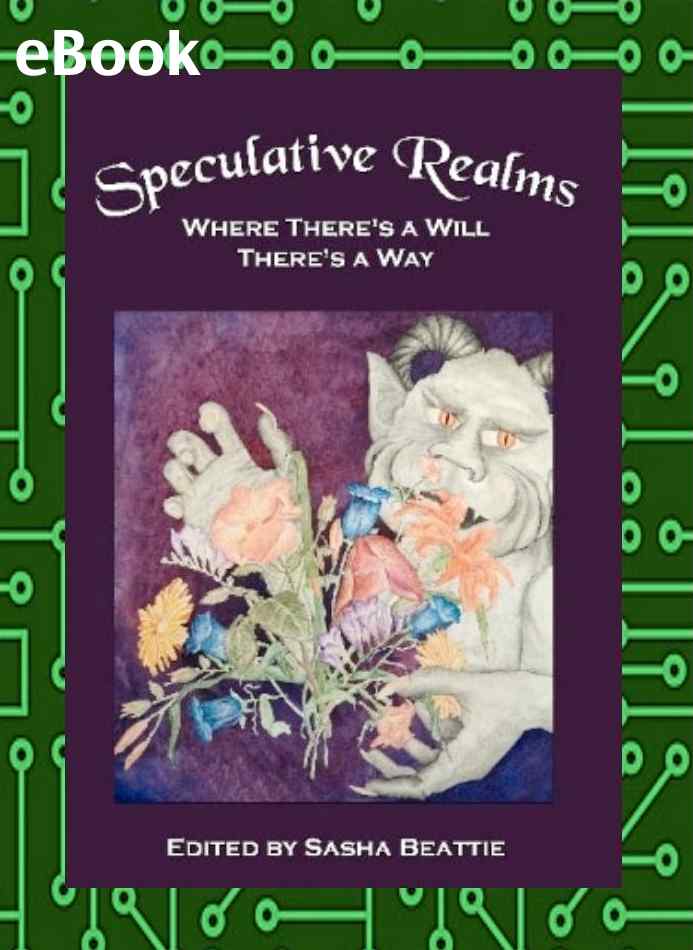
Click to buy on Amazon

It’s not often I get to post on my blog about something so lurid. So bear with me, I’m quite excited! “KanjiKiss” is a short story about a young Wyoming man who is lured away from a quiet life in the countryside by sexy Internet technology. He leaves his home for Seattle and falls in love with a girl. The girl lives in Asia, and he’s never kissed her, touched her, or even been in the same room.  His family isn’t happy about the situation, and he want’s to be with her forever.

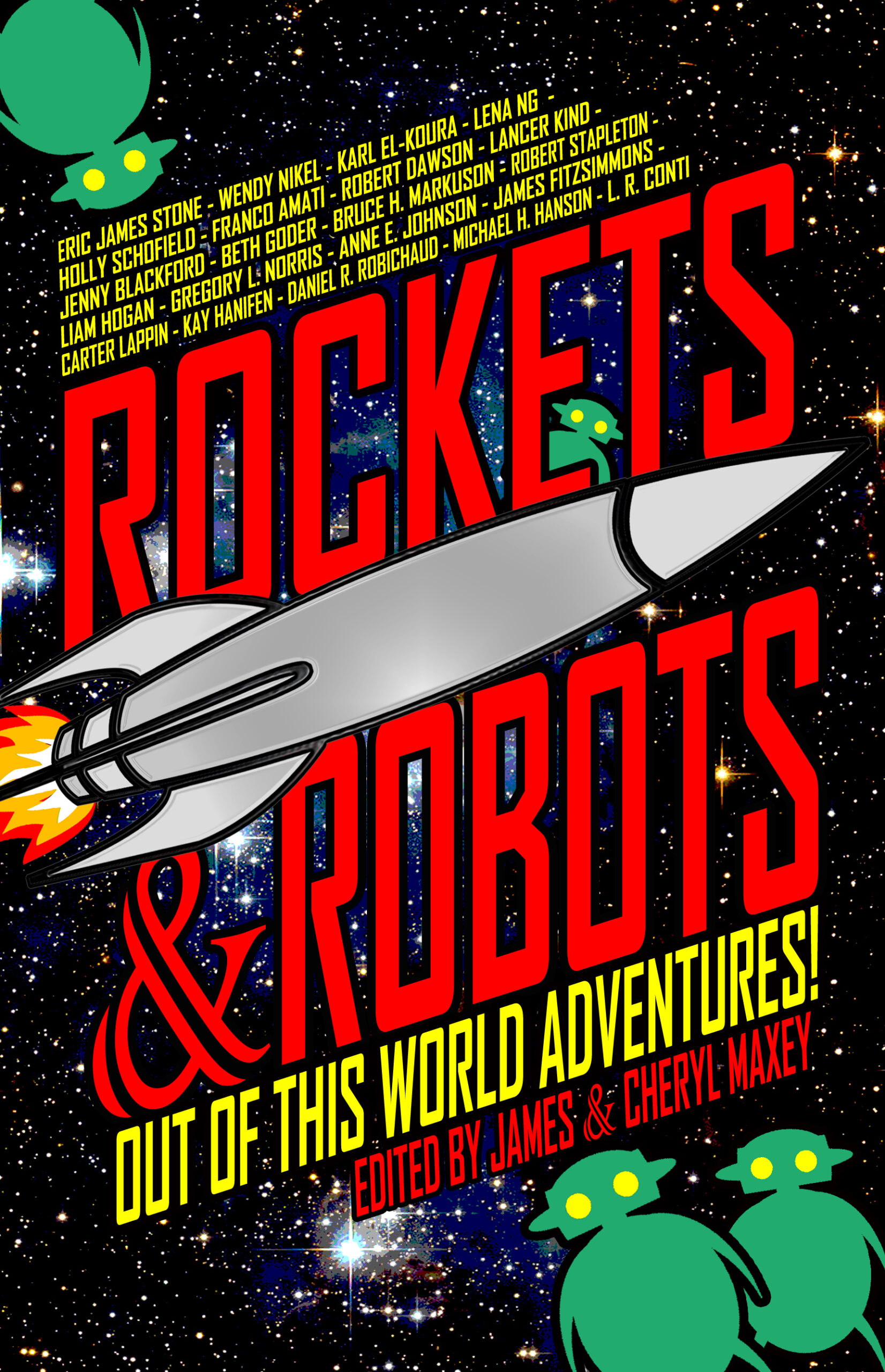
KanjiKiss is part of the Speculative Realms anthology and is filled with other great stories such as: “The Guardian” by Lyall Henderson, where a soldier aboard the most powerful warship in the galaxy must sacrifice what he loves most to save his people; or “Children of Ba-Seku” by Christopher Donahue, about a desperate prince using Egypt’s darkest secret to try and turn back technologically superior invaders.

Speculative Realms is now available on Amazon for $5.88, for a limited time only.

Well, I actually don’t know if the offer is limited.  But now that I’ve said it, you feel you’ll miss out if you don’t hurry, right? :-)

OK, clicky, clicky.  ;-)

Write a comment


It sucks to be a clone

29 August, 2009 (01:08) | Uncategorized | By: Lancer Kind

Maybe this is my personal problem. Maybe I’ve watched too much science fiction such as:

  • Star Trek–I know I shouldn’t be racist because someone’s skin is a different color,
  • Asimov’s BiCentennial Man and STNG (Commander Data)–I should treat sentient robots as equals, and
  • Fox’s Space: Above and Beyond–”tanks” are nice people too (people genetically engineered and born in vitro).

Though the jury of science fiction entertainment is still out on whether genetic engineering will be used for good or to subjugate those that aren’t engineered.  Personally, I think we just need to discuss this via market economics in that if it’s cheaply done at a massive scale, then the inequality argument goes away and the few don’t subjugate the rest, but I digress.  ;-)

In Star Wars: The Clone Wars, we see the Jedi fighting along side the clones that are the spawn of cool-ass mercenary, Bobo Fett.  And he doesn’t have to pay child support.

This week, I saw this flick for the first time, and what I saw was a little shocking: those very nice Jedi treating the clones like they were no better than the robot armies they were fighting.  (Well, those robots do seem sentient in a cute kind of way, but either way, both groups were being treated as slaves.  But all robots are treated as slaves in the Star Wars Universe.  They go around referring to people as “master.”)

So this all implies the characters in the Star Wars Universe are less enlightened than those of us on good ‘ol Earth.  I don’t know why….  Did they not watch or read as much science fiction as a person does on Earth to know that sentience goes beyond the boundaries of being a cool-ass Jedi? I know Space Opera is about Colonialism and Elitism, but come on!  Did not young Ani, in between pod races, read some books about humanity between sentient beings?

And this movie will be watched by untold millions of children. What message is Lucas trying to leave them with? What happened to wise Yoda? At no point does Yoda launch into a PSA about how clones each have names and that they are individuals too, or that the clones should unionize and demand equal treatment. In fact, Yoda tells Obi Wan that he hopes that Anakan learns to let go of his people, referring to Anakan caring too much about the lives of his clone friends.

Death Star DialogIt is all very strange to me to see this genre from which I usually get a very clear dialog about being moral, but in this case, perpetuates dehumanization of sentient clones (and robots). Perhaps this is why the Republic falls and the Jedi fall; the elitist meme brings out such a flaw that they come crashing down. Or maybe Lucas saw the discussion on Clerks about the death of the Death Star contract labor force and said to himself, “I’ll give those fictional guys something to bitch about.”

While as a five year old, I wanted to live the Star Wars vision. As an adult, I see the story lacks a liberal leaning, which ads to the universe’s foreignness. Is this an unintended side-affect of striving for a Space Opera tone?

I’d love to hear others comment on this…. I don’t believe Space Opera has to be colonial or elitist, but those elements make it easy to recognize.

Comments

Comment from M_F
Time August 29, 2009 at 02:33

Hmm, I think that in the first season of Clone Wars there were some episodes about treating the clones as humans. I’m referring to the s01e01 (“Ambush”) s01e05 (“Rookies”) and s01e16 (“The Hidden Enemy”). About robots: episodes 6 and 7. In the matter of fact, clone troopers were treated very similar to regular soldiers.

Comment from Lancer Kind
Time August 29, 2009 at 11:51

OMG! That’s fantastic! I had no idea that Cartoon Network produced more episodes in the Star Wars world. I was only aware that there had been a movie released. Now I get to see more episodes!

Well, it’s good to see character changes such as master Yoda no longer alluding to that the clones are less than people. From only the Clone Wars movie perspective, those clones are really just weapons to the Jedis as much as the robots are walking guns to the Trade Federation. This attitude is consistent across all the Star Wars characters so it’s part of their culture–clones == droids.
This is likely a necessary situation to have all of those nameless Storm Troopers in later SW movies.

I noticed a Clone Wars TV series excerpt where Yoda is talking to the clones, telling them that they can use the Force too. So clearly, this is an attitude change or at least a reveal that although they are “popcorn” (expendable) soldiers, Yoda sees them as on par as potential Jedi.

I haven’t seen the episode yet, but my guess is that after that small pep-talk, Yoda then sends them into a battle to die with glory, and we don’t hear about that humanizing the clones until a few more episodes when it is convenient. This is a safe bet as I don’t recall them being treated as humans with hopes and dreams even in SW Attack of the Clones.

Even a clone wants a family and see his kids go to college instead of forced into a life of being a mercenary.

But really, it’s OK. I’m going to enjoy watching this Space Opera TV series very much. Killing imaginary clones and droids still has a lot of entertainment value. ;-)

Comment from Lancer Kind
Time August 29, 2009 at 12:05

More on the Clone Wars TV series. It was aired in 2003 while the “Attack of the Clones” movie aired in 2008. The Clone Wars TV series ran three seasons, 5 episodes, 20 chapters (here, chapters are really what is commonly referred to as episodes, so the series ran 20 episodes). The last episode of the TV series ends as a setup to the movie Star Wars Episode III: Revenge of the Sith.

Source: http://www.imdb.com/title/tt0361243/episodes

Write a comment